
Requirements for Food Vendors
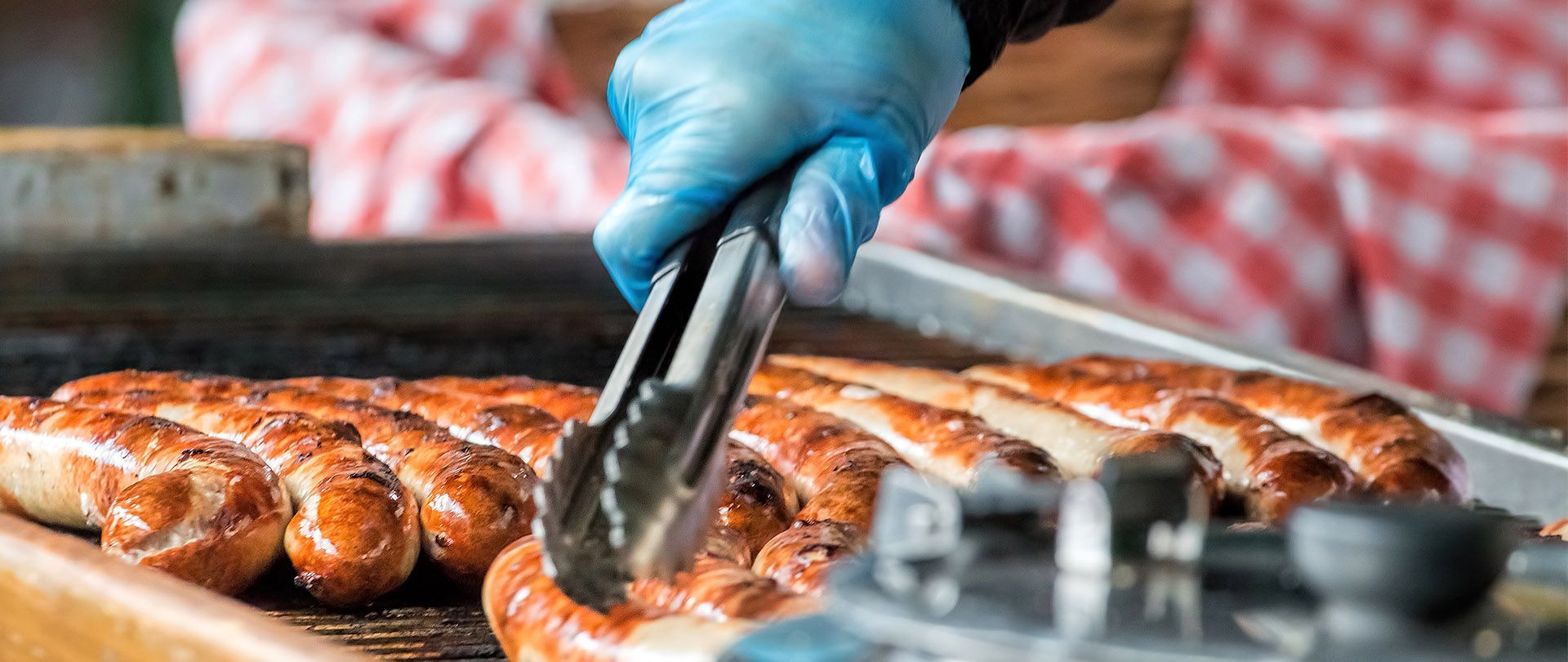
Food vendor's responsibilities
- Review the Requirements for Food Vendors at Special Events.
- Complete the online Food Vendor Application form at least 4 weeks prior to the event.
- Food vendor applications received beyond the deadlines may not be processed or approved prior to the event.
- Ensure at least one certified food handler is present during all hours of operation.
- Food vendors must ensure all food is from an inspected source and safe for consumption. An inspection report and/or documentation of pH and/or water activity to determine shelf stability of specific foods may be requested (such as canned or jarred products).
Food safety definitions
Cross-contamination occurs when safe-to-eat food has become contaminated with pathogenic bacteria, chemicals or unwanted items. Prepared food items can become unsafe when they come in contact with contaminated surfaces, utensils, hands, equipment and other food items.
The "danger zone" is the temperature zone where bacteria multiply. This temperature range is between 4°C and 60°C (40°F to 140°F). If food items are kept within this temperature range, bacteria will multiply and double every 20 minutes. Therefore, it is important to keep the food cold or hot and out of the danger zone to stop bacteria from growing.
Use an accurate probe thermometer to check the internal temperatures of potentially hazardous food.
Food-borne illness (or food poisoning) occurs when you eat contaminated food. It is a general term for:
- Infections caused by micro-organisms such as bacteria, viruses, and parasites
- Poisoning by toxins from bacteria or mould in food
- Poisoning by chemicals in food
Note: All types of food can make individuals sick if it is contaminated, but some types of food are higher risk than others. These are referred to as potentially hazardous or high-risk foods.
Potentially hazardous food is food that consists in whole or in part of:
- milk or milk products
- eggs
- meat
- poultry
- fish
- shellfish
Meringue and desserts that contain dairy products are considered hazardous foods. Hazardous food must be refrigerated.
Fruits and vegetables, which are generally considered low risk foods, but may become contaminated through food handling or production processes. Follow safe food handling practices and thoroughly wash fresh fruits and vegetables before preparation.
Non-hazardous foods do not normally support the growth of disease-causing bacteria and do not usually need to be refrigerated. Examples include:
- dry goods and cereals
- most baked goods and unconstituted dehydrated foods
- cookies
- breads
- cakes
- potato chips
- popcorn
- nuts
A number of organisms can be transmitted through water including bacteria, viruses and parasites. These organisms have the potential to make people sick. All water used throughout the event, including water used for hand washing, preparation of foods, cleaning and making ice, must be from a safe and potable supply.
A Public Health Inspector must take all water samples. Please contact the Halton Region Public Health at 905-825-6000 to set up an appointment for sampling.
Safe water supply
If the water supply for the event is from a private source (such as a well or cistern), the supply must be proven to be safe and potable by providing a water sample. A Public Health Inspector must take all water samples. Call 905-825-6000 to set up an appointment for samples to be taken.
A number of organisms can be transmitted through water, including bacteria, viruses and parasites. These organisms could cause illness. You must ensure that the water is safe when used to prepare food, drinks, for hand washing and for cleaning food contact surfaces and equipment.
- For cisterns supplied with municipally delivered water: 1 water sample is taken to determine whether supply is safe. A cistern that is used to collect rainwater is not to be used as a water supply.
- For treated or untreated wells: 3 consecutive samples, taken 1-3 weeks apart, are needed to determine the stability of the water supply.
For general information on water testing and water results, contact the Halton Region Public Health or visit the well water page.
Food preparation, storage and service area
- For outdoor events, food must be prepared and served under a structure to protect food from contamination.
- The structure must have a waterproof cover such as a canopy, umbrella, or tarp.
- Ensure your structure has enough space for dishwashing, handwashing sinks, food preparation, storage and handling.
Food handlers
If you handle food at a special events:
- Do not handle food if you have a cold, the flu, diarrhea or vomiting, sores or infected cuts on your hands.
- Wear clean outerwear.
- Wear hair restraints.
- Glove use is not mandatory unless you have a cut or burn. Change gloves in between tasks. Wash hands before putting new gloves on and after taking dirty gloves off.
Smoking is not permitted within the booth or wherever food is stored, prepared, and served.
Hand wash station
Hand wash stations are needed in all booths where food is being prepared or served. Hand sanitizers alone are not adequate alone on site.
- Stations consist of a container with a valve that can stay open while both hands are washed.
- A bucket is placed underneath to catch the waste water.
- Liquid soap and paper towels must also be included in this arrangement.
Hands must be washed regularly with liquid soap and warm water throughout the day, especially after:
- handling raw foods
- smoking
- shaking hands
- using the bathroom
- sneezing
- coughing
- after breaks
- before starting work
All water used must be from an approved safe supply.
Food safety management
Follow these strategies to ensure proper food safety:
- Use separate worktables or surfaces for the preparation of raw foods and ready-to-eat foods to prevent cross-contamination.
- Use utensils (for example, tongs, ladles, forks, spoons) to handle foods. You can use napkins or disposable wrappings to handle dry goods like pastries and donuts.
- Keep foods (including ingredients) separate from one another and have a full ingredient list available for each food for review by the Public Health Inspector or customers. This will satisfy labelling requirements and assist in dealing with allergy issues.
- An accurate probe thermometer is required to check cold holding, hot holding and cooking temperatures.
- Transport hot and cold foods quickly from place to place. Use thermal insulated containers with cold or hot packs to maintain minimum required temperatures.
- If foods are brought to the event cold and are to be served hot, then the food must be reheated properly first before placing in hot holding equipment like chafing dishes. Reheat food to appropriate cooking temperatures and then place it in hot holding equipment. Foods are to be reheated within 2 hours.
- Protect and secure foods during transportation, storage and display. You can use wraps, foil, lids or other similar food grade material to protect foods from dust, dirt, pests or foreign objects. Keep all foods and food supplies stored in a secured area, such as your booth or vehicle.
- Food must be stored in their original containers or in food-grade containers. Cardboard boxes, garbage bags, reused plastic buckets or pails are not acceptable.
- Food shall not be stored directly on the floor or ground. It must be stored at least 15 cm (6 in.) off the ground.
- It is recommended to discard leftovers daily instead of cooling foods for the next day. If you are cooling foods, they should be cooled to 4°C (or lower) within 6 hours or less.
- Do not mix old food with new food when replenishing service pans or chafing dishes.
- Keep your food products safe and secure (for example, keep storage bins or trucks locked).
Food storage temperatures
- Cold holding - 4°C (40°F) or lower
- Hot holding 60°C (140°F) or higher
Cooking/reheating temperatures
Use a probe thermometer to check cooking temperature:
- whole poultry (chicken, turkey) - 82°C (180°F)
- poultry pieces or ground poultry - 74°C (165°F)
- hazardous food mixtures - 74°C (165°F)
- ground meats (beef, pork, lamb) - 71°C (160°F)
- pork and pork products - 71°C (160°F)
- fish - 70°C (158°F)
Cleaning and sanitizing
All water must come from an approved safe and potable supply. Use the three-step method of dishwashing to clean food contact equipment and utensils (you can use tubs or basin if sinks are not available during the event):
- First sink - wash food contact equipment and utensils
- Second sink - rinse with clean water
- Third sink - sanitize
Change the wash, rinse and sanitizer water frequently (for example, every 2 hours) or as the water becomes dirty. Do not use cloths to wipe food contact surfaces dry after sanitizing. Food contact surfaces should be air dried.
Keep a back-up supply of clean utensils (tongs, scoops, etc.) to replace soiled or contaminated ones. Back-up utensils should be wrapped or kept in a clean, sealed container.
Sanitizing solutions
- You can use a sanitizing solution of chlorine (bleach) and water at a concentration of 100 ppm (parts per million) in the third sink. To make a 100-ppm chlorine solution, combine 2 mL (1/2 tsp) of bleach with 1 L of water. Immerse utensils for at least 45 seconds.
- Other sanitizers in proper concentrations, following the manufacturers’ instructions, may be used if approved by Halton Region Public Health.
- Ensure that all containers (bucket/spray bottle) of soap or sanitizer solutions are properly labelled and kept away from food.
- For large items such as cutting boards, that can only be washed and rinsed in place, a sanitizing solution can be applied of 200 ppm bleach and water (1 tsp chlorine in 1 L of water).
- Use sanitizer test strips to check sanitizer concentration.
Optional: disposable utensils
Waste disposal
Follow these tips for proper waste disposal:
- Garbage such as food waste must be stored in garbage bins of durable, water/rodent-proof material and covered with a tight-fitting lid.
- Grease from fryers must be stored in a covered, non-flammable, and durable container.
- Wastewater shall be stored in a covered, durable container.
- Final disposal of all waste must be done in an approved manner.