
Backwater Valve Installation Subsidy
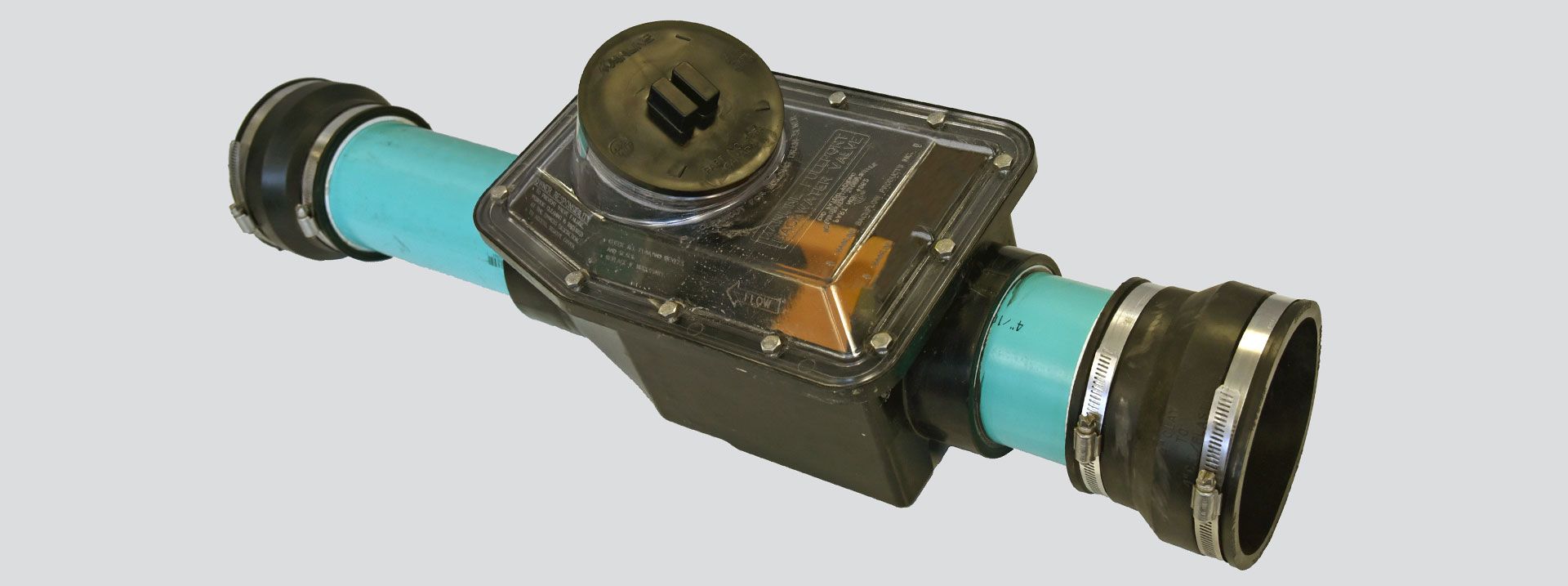
How does a Backwater Valve reduce potential for basement flooding?
During intense rain events, the wastewater (sanitary) sewer may become overloaded with rain water. This can result in the overloaded sewer forcing wastewater to flow backward into basement drains. A backwater valve is designed to prevent wastewater from backing up through the wastewater pipe into your home.
During normal use, the backwater valve remains open. This allows wastewater from your toilets, shower, sinks, etc. to flow freely from your home to the wastewater main. If flow reverses because the wastewater main is overloaded with rain water, the backwater valve will automatically close, thereby protecting your basement from potential wastewater backup. Once the rain event is over, the backwater valve will re-open to allow wastewater to flow normally to the sewer main.
Related supports
Backwater valve inspection and maintenance
Regularly inspect and maintain your backwater valve to protect your home from a sewer backup and reduce the risk of basement flooding.
Follow these helpful tips:
- Review your backwater valve manufacturer manual. This document should offer directions on how to inspect and maintain your backwater valve.
- For more information on how to operate and maintain your backwater valve, contact the manufacturer or installer.
- Dispose of fats, oils or grease in your Green Cart, never down your drain where they can harden and prevent your valve from working properly.
- Put disposable wipes in the garbage. Never flush them down the toilet.
- Assess your household practises related to the disposal of waste.
- Important: When the backwater valve is closed, avoid using any plumbing fixtures in your home. This includes toilets, sinks, dishwashers, tubs/showers or washing machines. Using water while the valve is closed may result in flooding your home.
- Inspect and clean your backwater valve every 3 months. Wear protective gloves and eyewear.
- Open the access cap and remove any debris.
- Check that the flapper moves freely and remove grease or debris.
- Maintain the O-ring on the valve body and replace when necessary.
- Contact a qualified plumber or drainage contractor if you need help or are experiencing any recurring issues.
If your backwater valve closes, stop running water inside your home to prevent it from backing up. Some homes have an alarm system to alert the homeowner when the backwater valve has closed; if your home does not have an alarm, regularly check the valve during periods of heavy rain. Stop using water in your home if needed.
When the backwater valve returns to its open position, wastewater from the home will be re-directed to the wastewater sewer. At that time, it will be safe for you to start using water in your home again.
Financial support
Halton Region’s Basement Flooding Prevention Program subsidy amounts were updated in September 2025. For work completed after July 15, 2024, Halton Region’s Backwater Valve install subsidy covers 50% of costs incurred for materials and labour charged to install a backwater valve, up to a maximum of $1600.
For work completed prior to or on July 15, 2024, Halton Region’s Backwater Valve install subsidy covers 50% of costs incurred for materials and labour charged to install a backwater valve, up to a maximum of $675.
Eligibility criteria
To qualify for this subsidy, all of the following conditions must be met. The home where the work is completed must:
- be located within Halton Region; and
- be connected to Halton Region’s municipal wastewater (sewer) system (homes on septic systems are not eligible); and
- applications must be submitted within one year after the work has been completed.
Halton Region requires proof that stormwater connections to the wastewater system do not exist or will be disconnected prior to installation of the backwater valve. This proof must be provided from one of two sources:
- a Household Drainage Survey, where eligible; or
- a plumbing or drainage assessment completed by a licensed plumber or qualified drainage contractor.
Additional criterion: Installing a device that helps prevent wastewater backups from flowing backwards into the home during heavy rain. Backwater valves are not suitable for all homes.
- Exterior installations are not eligible.
- Stormwater sources (such as weeping tiles) must not be connected to the wastewater system for the valve to be eligible.
- Not all homes are suitable; effectiveness depends on site conditions.
Limitations
Application requirements
Your application must include:
- a completed and signed Basement Flooding Prevention Subsidy Program application form (PDF file)
- a completed and signed Basement Flooding Prevention Subsidy Program waiver form (PDF file)
- an itemized invoice, paid in full specifically listing any materials and labour and identifying specifics of each component of work:
- backwater valve installation
- plumbing assessment
- CCTV videos
- permit costs
- a copy of the building permit required by, and obtained from your Local Municipality (Town of Halton Hills, Town of Milton, Town of Oakville or City of Burlington)
- proof the building permit has passed final inspection and signed off by the applicable local municipal building inspector (Town of Halton Hills, Town of Milton, Town of Oakville or City of Burlington)
- confirmation from the contractor that the weeping tile is not connected or has been disconnected from the wastewater system, and that any existing connection upstream has been fully disconnected as part of the completed work:
- must include documented proof that any upstream stormwater connections have also been removed or disconnected
- can be provided through Household Drainage Survey results, closed-circuit television (CCTV) or a dye test
External Backwater Valve installations are not eligible for subsidy funding.
Invoice requirements
Apply to the program
- Download the Basement Flooding Prevention Subsidy Program application form (PDF file) and the Basement Flooding Prevention Subsidy Program waiver form (PDF file).
- Submit the completed application form and waiver along with the required documentation, electronically. Ensure submission completeness by following the check list included on the application form. Errors or omissions will delay approval of the subsidy.
- Scan and email your completed submission to basementfloodingsubsidy@halton.ca .
- Upload larger files, such as CCTV video, to our online Dropbox platform (external link).
A subsidy cheque will be mailed 4-6 weeks from the date we receive a completed application for an eligible project with all required documentation.
For assistance with using Dropbox
Please see our Dropbox example image (image file) or review the instructions below:
Where Dropbox requests “Your Email”
Where Dropbox requests “Subject”
Where Dropbox requests “Message”
Where Dropbox requests “Password”
Where Dropbox requests “Expire Date”
Where Dropbox requests Recipient “Email”
Additional options for subsidy submission include the following:
- Mail to:
Halton Region Public Works
c/o Water and Wastewater Program Ambassador
Woodlands Operations Centre
1179 Bronte Road, Oakville, ON L6M 4G3 - Drop off in person:
Place submission in the black mail box located in front of the sliding doors at the main entrance to Halton Regional Centre, located at 1151 Bronte Road, Oakville (Google Maps link)
Note: Woodlands Operations Centre is currently closed to the public.
Disclaimer
Successful completion of basement flooding mitigation work under the subsidy program depends on clear coordination between homeowners, contractors, Halton Region, and your Local Municipality. Each party has a specific role in making sure the work is done properly and meets all the necessary requirements.
Halton Region does not choose contractors, participate in contracts or resolve disputes between homeowners and contractors.
For more information: