
Expressing, Storing and Feeding Breastmilk
Reasons for expressing breastmilk
Reasons for expressing breastmilk may include:
- you and your baby are separated
- your baby is having difficulty feeding or latching onto the breast
- you want to increase your milk supply
- you are engorged (your breasts are very full)
- you want to express and store breastmilk for later use
- you want to increase your confidence in your body’s ability to make milk
You can express and collect breastmilk by hand expression or using a breast pump.
This page is written with inclusivity in mind. Learn about the use of inclusive language in Halton’s breastfeeding information.
Methods to express breastmilk
Hand expression
Hand expression is one way to remove and collect colostrum/breastmilk.
In low risk-pregnancies, prenatal hand expression after 36 weeks of pregnancy is considered safe. For pregnant people with diabetes, prenatal hand expression and collection of colostrum is sometimes recommended. This may reduce the need for supplementation with formula if the baby has low blood sugar. Speak to your health care provider to discuss prenatal hand expression during your pregnancy.
In the early days of breastfeeding, hand expression is especially useful as it is more efficient at removing colostrum (the early breastmilk) from the breast than a mechanical pump.
Benefits of hand expression
Breast pump
Breast pumps can also be used to remove breastmilk and are especially useful to establish and maintain breastmilk supply if the breastfeeding parent and infant need to be separated.
There are many different types of breast pumps that vary in price, how easy they are to use, how portable they are and how effective they are at removing milk. Electric pumps may help increase milk production more than hand expression alone but combining pumping with hand expression (hands-on pumping) can help tell your body to make even more milk.
Breastmilk storage guidelines
Breastmilk is a living food. It contains antioxidants, prebiotic, probiotic, antibacterial and immune-boosting properties. Whenever possible, feed your baby directly from your breast or give your baby refrigerated breastmilk milk before frozen breastmilk. Some nutrients and health properties are lost when the milk is frozen, defrosted and warmed up, or if stored incorrectly. If feeding directly at the breast is not possible, breastmilk can be expressed and stored for later use.
Storing breastmilk
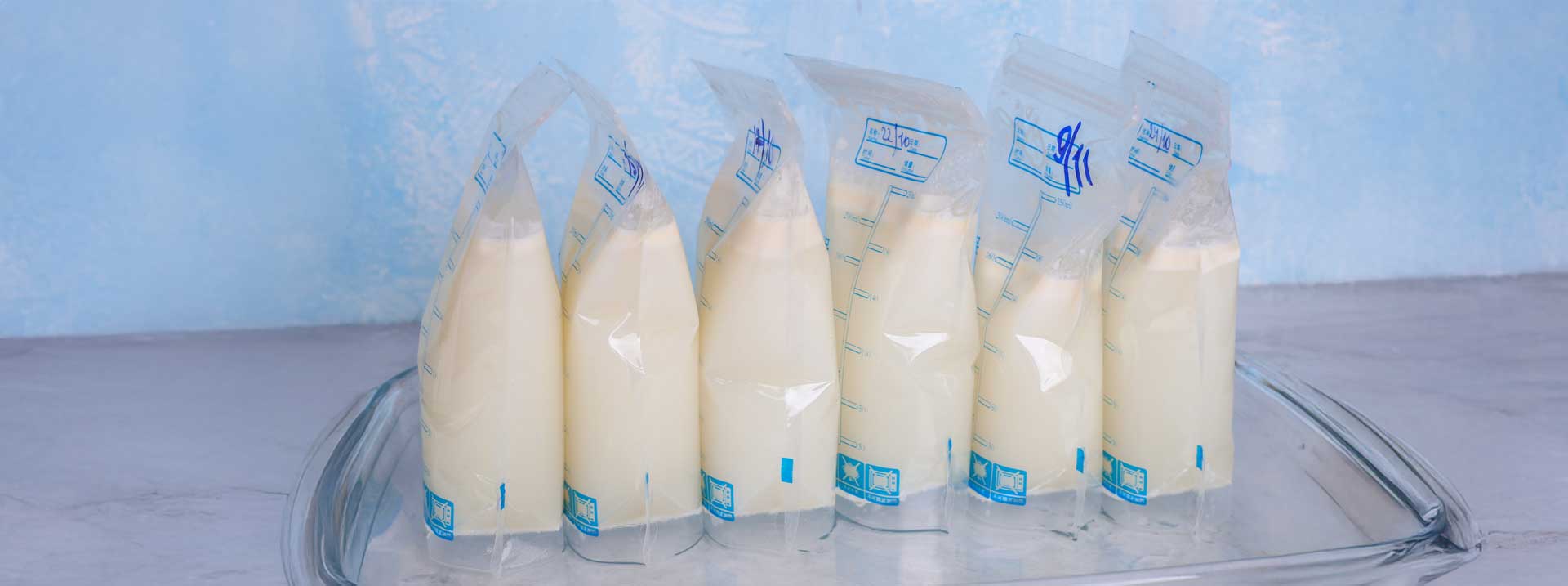
Expressed breastmilk should be stored in glass or BPA-free hard plastic containers or sturdy bags designed for breastmilk storage.
Freshly expressed breastmilk can be stored safely:
- At room temperature (10-29C) for up to 4 hours
- In a cooler with ice packs (15C) for up to 24 hours
- In the refrigerator (0-4C) for up to 4 days
- In a freezer for (-4 to -20C) for up to 6 months (12 months if in a deep freezer)
Refrigerated or frozen breastmilk may smell different to fresh milk. This is because of oxidation of fatty acids. This milk is still safe for babies.
When freezing breastmilk:
- Leave space at the top of the container as the milk will expand.
- Label with the date you expressed the milk, and your child’s name.
- Freeze in smaller amounts (about the amount your baby would eat in one feed) to prevent wasting thawed milk.
- Do not add freshly expressed milk to cooled or frozen milk. Cool the newly expressed milk before adding it to older stored milk.
Feeding expressed breastmilk
Use freshly expressed breastmilk first, as it has the most antioxidants, vitamins, protein, fat and probiotic bacteria, compared to refrigerated or frozen milk.
To thaw frozen breastmilk, either:
- Place the container in the fridge overnight.
- Run under warm water.
- Set in a container of warm water.
- Or use a waterless warmer.
Most babies will drink cold milk, but some prefer it at room temperature or warmed up. You can warm milk in lukewarm (not hot) water. Do not microwave the milk, as it removes the immune benefits and creates hot spots.
Once an infant begins drinking expressed breastmilk it is exposed to bacteria from their mouths. This milk should be thrown out within 1-2 hours after they have finished feeding.
Methods for giving expressed breastmilk
It is best to avoid introducing a bottle until breastfeeding is well established. Drinking from a bottle, requires a shallower latch and different tongue and jaw movements than breastfeeding. The flow of milk from a bottle is much faster than from the breast, which may result in overfeeding or the baby developing a preference for the bottle.
In the early days and weeks, if you need to supplement with expressed breastmilk or formula, try using a small cup or spoon instead of a bottle. You can express the breastmilk directly into the cup or the spoon.