
Some of the most important infrastructure that supports Halton’s communities is the kind you never see. Every time you turn on the tap or flush a toilet, you’re relying on a hidden network of pipes, pumps and dedicated staff who keep everything running smoothly.
For decades, Halton has taken pride in caring for these systems through our state‑of‑good‑repair program. It’s a long‑standing commitment that helps ensure residents can count on safe, reliable water and wastewater services every single day.
To keep these systems working properly and to make sure they’re ready to support our growing community, we regularly review, maintain and upgrade our critical infrastructure. Over the past three years we’ve budgeted more than $250 million annually in Public Works stat-of-good repair infrastructure work, including $120 million to replace and repair water and wastewater mains and pipes so they continue to serve Halton well into the future.
What is ‘state-of-good repair and why does it matter?
State-of-good-repair (SOGR) focuses on taking care of the existing infrastructure assets we rely on every day (including roads, water pipes and waste systems) to make sure they work safely and reliably across Halton.
To support SOGR, the Region regularly assesses the performance, functionality and overall condition of its infrastructure to determine what needs to be fixed, upgraded or replaced. This consistent, proactive approach helps ensure the strong delivery of essential services to all residents, including clean drinking water, wastewater treatment, solid waste collection and transportation networks.
How do we decide which assets to repair or replace?
Halton Region uses a clear, robust capital planning process to determine which infrastructure needs attention and when, based on both immediate and longer-term state-of-good-repair (SOGR) project needs.
1. Immediate SOGR:
Immediate repairs or replacements are identified using a risk assessment approach. This involves careful evaluation of various factors, including:
- Current asset condition and performance
- Impacts to service reliability and availability
- Potential risks to public health and safety
- Legislative requirements
- Environmental impacts
Other considerations include coordinating projects with local municipalities and bundling multiple construction projects together to reduce community disruption and improve cost efficiency.
2. Longer-term SOGR:
For longer-term planning, we use data-driven lifecycle modeling, which is advanced technology that helps us predict how infrastructure will age and deteriorate over time. This allows us to plan proactive investments that keep our infrastructure strong and services reliable.
State-of-good-repair in action: Upper Middle Road and Drillbert
The infrastructure upgrade on Upper Middle Road in the City of Burlington is just one recent example of the significant investments being made across Halton to keep water and wastewater systems reliable and ready for the future. Once complete, this work will not only update our current water system, but it will boost capacity in the area by 25% to help support essential services to the growing community.
As part of this project, a new watermain is being installed under Highway 407 using microtunnelling, which is a construction method that uses a remote-controlled microtunnel boring drill designed to install pipes underground while minimizing distributions to the roads above.
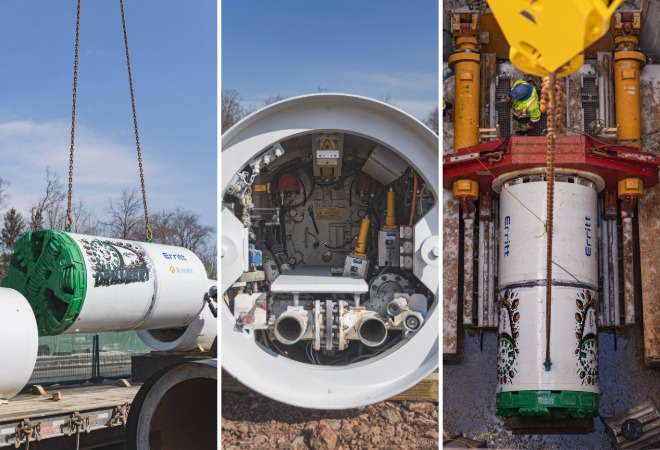
Meet Drillbert!
Because this work was happening right in the middle of a residential area and close to two elementary schools, we wanted to make sure families felt informed and safe every step of the way. To do that, we added extra traffic and pedestrian safety measures around the neighbourhood and partnered with both school boards so parents and students would always know what was happening and why.
We shared regular project updates through school newsletters and presented to every class to explain how microtunnelling works, why this project matters and how to stay safe around construction areas. To make learning fun and easy to understand for students, we created activity guides and posters, and even invited them to help name the microtunnelling drill. The creativity was incredible, and after lots of great suggestions, two classes chose the winning name: Drillbert.
Earlier this year, Drillbert safely and successfully completed the tunnelling, marking a major milestone for the project.
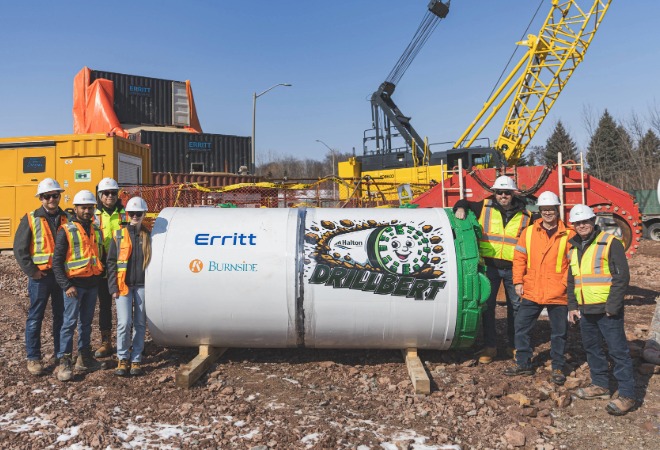
You can take a closer look at how we kept the community involved and protected in our short safety video below.
Upper Middle Drill Construction Project - Safety Tips for Kids (YouTube video link)
Sustaining Halton’s infrastructure now and into the future
Halton Region is responsible for the stewardship of more than $19.7 billion in assets which includes key infrastructure that support essential water, wastewater, solid waste management and transportation services. This includes water and wastewater mains, water and wastewater treatment plants, solid waste management facilities, roads and bridges throughout Halton.
Currently, 80% of the Region’s assets are rated in “Good” to “Very Good” condition, meeting the target established in Halton Region’s 2023–2026 Strategic Business Plan. Through careful, long-term strategic planning, we are committed to making the right investments at the right time to keep our infrastructure safe, reliable and future-ready.
Learn more!
To learn more about our infrastructure investments and how we continue to deliver safe, reliable services, you can: