
Tattoos and Piercings
Tattoos and Piercings
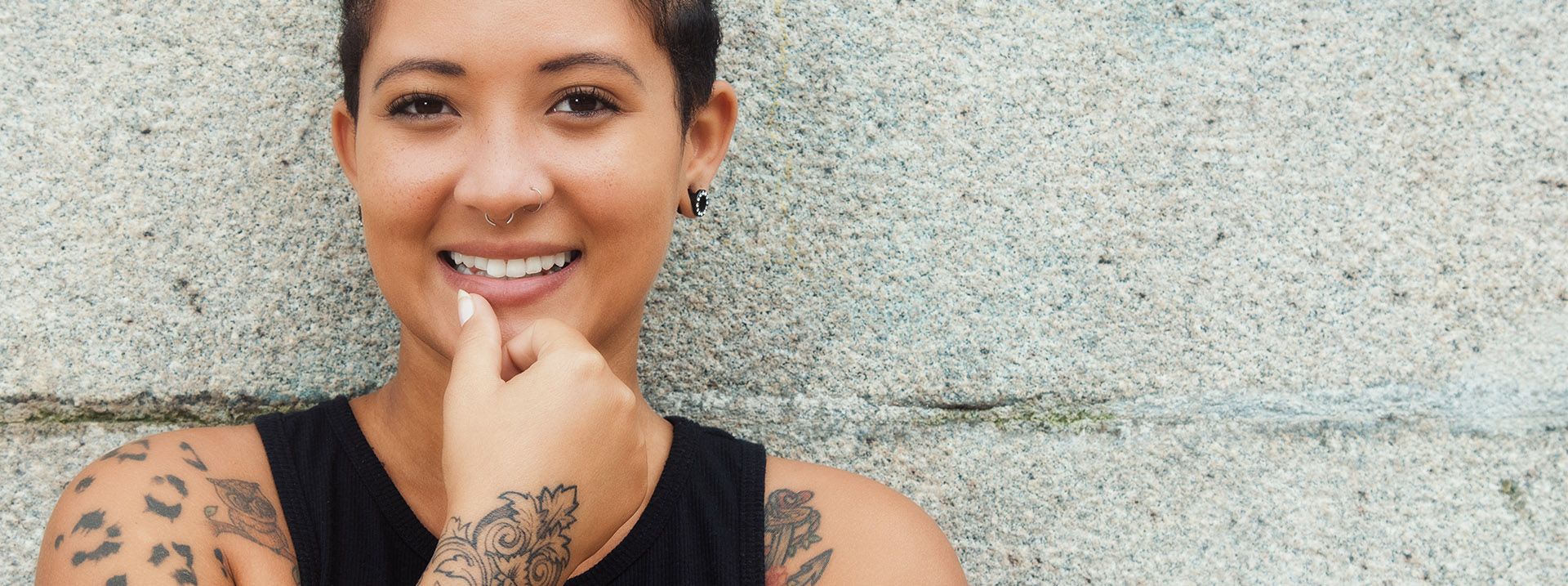
Getting a tattoo
The decision to get a tattoo or piercing is one that should involve serious thought and planning. Do your research before deciding on a body artist to ensure a safe visit and don't be afraid to ask questions! A good body artist will answer all of your questions openly and truthfully.
Are tattoos and piercings safe?
- When done by a professional body or tattoo artist who takes the proper precautions to protect customers and themselves, yes.
- Piercings and tattoos can increase the risk of contracting blood borne diseases such as HIV/AIDS and Hepatitis B and C.
- Touching the newly pierced or tattooed area with dirty hands can cause infections.
- We strongly recommend a Hepatitis B vaccination before getting a piercing or tattoo.
What are the risks?
- Make sure you watch your body artist open the packaging of your brand new sterile needle. Reusing needles for piercings or tattoos is like sharing injectable drug needles.
- Piercing devices should only be used for earlobes (or not at all).
- Old jewellery can hold viruses, so choose new, sterile jewellery for your piercing. Surgical steel is best.
- Ensure your tattoo artist uses only fresh ink for your tattoo. Ask to see your ink poured into new, disposable “caps”. A virus can survive for a long time in ink.
What should I consider when choosing the location of my tattoo or piercing?
- Some areas on the body can become infected more easily than others.
- Some sites have different amounts of pain.
- Think about how you might feel about your choice 5-10 years from now.
- Do you want your tattoo or piercing to always remain visible?
How do I care for my piercing or tattoo?
- Always wash your hands before touching any new piercing or tattoo.
- The healthier your lifestyle, the easier it will be for your the site to heal.
- Follow the steps as given by your body artist to care for your piercing(s) or tattoo.
- Make sure a sterile, non-stick bandage covers your new tattoo when you leave.
- If you have a mouth piercing, you must clean your mouth many times a day to prevent infection.
- Take a shower rather than a bath. If you prefer a bath, clean the tub well before each use.
- If any piercing or tattoo becomes sore, red, swollen or oozes pus, you may have an infection. See your doctor immediately.
- The body artist should give you a written list of things to do to prevent infection.
What should I consider when choosing a body artist/shop?
- Take the time to find a professional. How long was their training?
- Shop around before you get a piercing or tattoo. Get all of your questions answered.
- The body artist should not drink alcohol or take drugs while working on you.
- Is the shop clean? A dirty shop increases your risk of infection, which could ruin your piercing or tattoo and be harmful to your health.
- Do they sterilize equipment and disinfect work surfaces to remove blood and body fluids?
- Do they use an autoclave?
- Do they have a sink to wash their hands?
- If the area needs shaving, is a new disposable razor used?
- Do they clean the area with soap and water and then wipe with an antiseptic swab?
- Do they use new sterile gloves for each piercing or tattooing?
- Are new disposable needles used?
Remember: A good body artist will answer all of your questions – just ask them!
How long do tattoos and piercings take to heal?
Tattoos
Tattoos can take up to six weeks to heal. Make sure to follow proper care instructions to prevent infection.
Piercings
| Placement | Time |
|---|---|
Earlobe | 6 - 8 weeks |
Ear cartilage | 4 months - 1 year |
Eyebrow | 6 - 8 weeks |
Nostril | 2 - 4 months |
Nasal septum | 6 - 8 months |
Nasal bridge | 8 - 10 weeks |
Tongue | 4 weeks |
Lip | 2 - 3 months |
Nipple | 3 - 6 months |
Navel | 4 months - 1 year |
Female genitalia | 4 - 10 weeks |
Male genitalia | 4 weeks - 6 months |